



Riyadh – March 10, 2026
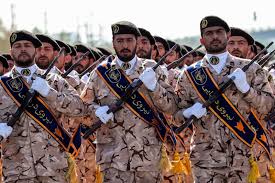
As the U.S.-Israeli war on Iran enters its 13th day, Iran’s Islamic Revolutionary Guard Corps (IRGC) issued a stark warning Monday, declaring that regional security is indivisible: “Security and stability in the region is for everyone or for no one.”
In a statement released through its official channels, the IRGC announced the execution of the 35th wave of retaliatory strikes against Israel and U.S. military bases in the region. The announcement came hours after Speaker of Parliament Mohammad Baqer Qalibaf delivered a televised address vowing reciprocal retaliation for any strike on Iranian infrastructure.
Qalibaf: “Eye for an Eye, No Compromise”
In a post on X written in Arabic, Qalibaf—a former IRGC commander—warned: “Let the enemy know that whatever they do, there will certainly be an immediate and equivalent response. Today, we fight according to the principle of eye for an eye, tooth for a tooth, without compromise or exception. If they target our infrastructure, we will target their infrastructure in return.”
Qalibaf’s remarks followed reports of intensified U.S. airstrikes on Iranian energy facilities and military sites, including the latest wave that targeted oil depots near Bandar Abbas and power stations in Isfahan.
Larijani Dismisses Trump Threats: “The Iranian People Do Not Fear Empty Threats”
Supreme National Security Council Secretary Ali Larijani, responding to President Donald Trump’s earlier warning that any Iranian disruption of oil flows through the Strait of Hormuz would be met with strikes “twenty times harsher,” posted on X: “The Iranian people do not fear your empty threats. Greater powers than you have failed to erase us… beware that you may be the ones erased.”
Larijani added: “The Strait of Hormuz will either be a strait of relief for everyone or a strait of suffocation for those dreaming of war.”
Trump’s Escalation Warning
Earlier on March 10, President Trump posted on Truth Social: “If Iran stops the flow of oil through the Strait of Hormuz, the United States will respond with overwhelming force—twenty times harsher than anything they have seen before. Death, fire, and fury will descend on Iran if they block the strait. We are giving the world a gift by keeping that oil flowing—especially China. Let’s hope they don’t force our hand.”
Trump also suggested the U.S. would target “easy-to-destroy” assets, making it difficult for Iran to rebuild its capabilities.
Strait of Hormuz: Commercial Traffic Remains Paralyzed
Maritime tracking firms (Kpler, Vortexa) confirm that tanker transits through the Strait of Hormuz remain down ~90% since late February. At least 10 commercial vessels have been attacked in or near the strait since Iran effectively closed the passage in retaliation for the initial U.S.-Israeli strikes on February 28.
The near-total halt has triggered:
- Force majeure declarations by Kuwait, Qatar, Iraq, and (as of March 9) Saudi Arabia and the UAE.
- Brent crude prices hovering near $93–94/bbl.
- Massive rerouting around Africa, adding 10–14 days and millions in costs per voyage.
Regional & International Reactions
- European Commission: Vice-President Valdis Dombrovskis reiterated Monday that prolonged disruption in the Strait of Hormuz and attacks on Gulf energy infrastructure could trigger a “major recessionary shock” for the global and European economies.
- France: President Emmanuel Macron announced plans for a “purely defensive” EU-led maritime mission to secure navigation in the strait once “the hottest phase of the conflict” subsides. France will deploy two frigates to the Red Sea as part of an existing EU operation.
Outlook: Tit-for-Tat or Total War?
The IRGC’s “everyone or no one” doctrine and Qalibaf’s “eye for an eye” pledge signal Iran’s intention to match every perceived escalation blow-for-blow. With U.S. Defense Secretary Pete Hegseth vowing to intensify strikes and Trump threatening overwhelming retaliation, the region stands on the edge of a broader naval and infrastructure war.
As one Gulf-based security analyst told Al Arabiya: “Both sides are now locked in a cycle of reciprocal damage. The question is no longer if the Strait will reopen—but how much destruction will occur before either side blinks.”
 WORLDNABD Global Geopolitical Analysis Platform
 The World’s Pulse
 www.worldnabd.com