


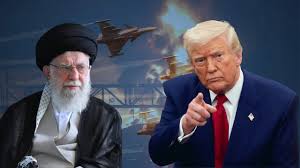

Tehran / Washington / Jerusalem – February 28, 2026 — Since the early hours of Saturday morning, unconfirmed reports, Telegram channels, opposition media outlets and several viral social-media posts have been claiming that Iran’s Supreme Leader Ayatollah Ali Khamenei was killed or gravely wounded in the opening wave of the massive US–Israeli airstrikes codenamed Operation Epic of Wrath (ملحمة الغضب in Arabic, “Wrath Saga” in some English translations).
The rumor exploded online around 07:30 Tehran time when several Persian-language opposition accounts, followed shortly afterward by Hebrew- and Arabic-language channels close to Israeli intelligence circles, posted variations of the same message: “Khamenei is dead / eliminated / seriously injured after a direct strike on his residence in Niavaran.”
Within 90 minutes the claim had been shared more than 1.2 million times across X, Telegram and TikTok, accompanied by grainy satellite images showing thick smoke rising from northern Tehran and short clips — impossible to geolocate or authenticate — purporting to show ambulances rushing through blocked streets.
Official Iranian Silence So Far — But Not Denial
As of 21:30 Tehran time (18:30 GMT), neither the Office of the Supreme Leader, the Iranian presidency, the IRGC spokesperson nor state television (IRIB) has issued any statement confirming, denying or even acknowledging the rumor. This prolonged silence is itself fueling speculation:
- In June 2025, when false reports of Khamenei’s death circulated during the 12-Day War, the state broadcaster aired a 45-second video of the Supreme Leader speaking live within two hours.
- Today — more than 15 hours after the first bombs fell — no such proof-of-life footage has appeared.
The only semi-official reaction came from Foreign Ministry spokesman Esmaeil Baghaei, who told Al Mayadeen TV:
“The criminal enemy is spreading lies and psychological warfare because it has failed to achieve any of its military objectives.”
He did not explicitly say “the Supreme Leader is alive and well” — a sentence Iranian spokespeople almost always include when such rumors appear.
What the Available Evidence Shows
- First-wave target package Multiple US and Israeli sources (speaking anonymously to AP, Axios and i24NEWS) confirm that the very first strike package — launched around 10:00 Tehran time — included “leadership targets” in the Niavaran district. Satellite imagery analyzed by commercial providers (Planet Labs, Maxar) shows at least three large craters and extensive fire damage in the immediate vicinity of the Supreme Leader’s known residence and office complex.
- IRGC air-defence failure Iran’s state-of-the-art Bavar-373 and S-300PMU-2 batteries were supposed to protect the capital. Preliminary battlefield assessments leaked to Western media indicate that several batteries were blinded or destroyed in the first ten minutes by stand-off munitions and electronic attack, allowing follow-on aircraft to penetrate deep into Tehran airspace.
- No public appearance Khamenei has not delivered a televised address, issued a written statement through his website, or appeared in any verifiable video since Thursday evening — a 36+ hour communications blackout that is extremely unusual during a major national crisis.
The Political Vacuum Scenario
If Khamenei is indeed dead or incapacitated, Iran enters uncharted constitutional territory:
- According to Article 111 of the Iranian Constitution, the Assembly of Experts must convene immediately to select a new Supreme Leader.
- Until then, the three-member Interim Leadership Council (President Masoud Pezeshkian, Judiciary Chief Gholam-Hossein Mohseni-Eje’i, and parliament speaker Mohammad Bagher Ghalibaf) assumes collective authority.
- Hardliners inside the IRGC and Qom clerical establishment are already reported to be manoeuvring to ensure that the next Leader comes from their camp rather than the relatively pragmatic “reformist-principlist” current represented by Pezeshkian.
Several exiled opposition figures — most prominently Reza Pahlavi — seized the moment to call for an immediate uprising, telling Iranians:
“The head of the snake has been cut off. This is your moment. Stay safe tonight, prepare, and be ready for the final move.”
Why the Fog Persists
Several factors explain why the world still does not have clarity 15+ hours after the first bombs:
- Communication jamming — US electronic-warfare aircraft are known to have blanketed Tehran with heavy jamming from the outset.
- Leadership dispersal — Iranian officials routinely scatter to underground bunkers during crises; Khamenei may simply be unreachable.
- Psychological warfare — Both sides have an interest in manipulating perceptions: Washington and Jerusalem want to sow panic inside Iran; Tehran wants to avoid projecting weakness.
Bottom Line (as of 21:30 Tehran time)
- Confirmed: Heavy strikes hit the Niavaran district and other leadership compounds.
- Highly likely: Khamenei was at least in the target area when the first wave landed.
- Unconfirmed: Whether he is dead, wounded, or safely evacuated to a bunker.
- Very probable: If he is alive, Iran will produce proof-of-life footage within the next 6–12 hours to kill the rumor. If no such footage appears by Sunday midday Tehran time, the probability that the Supreme Leader has been killed or incapacitated will rise above 80 % in most Western intelligence assessments.
Until then, the phrase echoing across Persian-language social media tonight is simple and chilling: “Khamenei kojāst?” (Where is Khamenei?)
🌍 WORLDNABD
Global Geopolitical Analysis Platform
🧭 The World’s Pulse
🔎 www.worldnabd.com